What Private-Label Food Brands Expect from Contract Ingredient Blenders
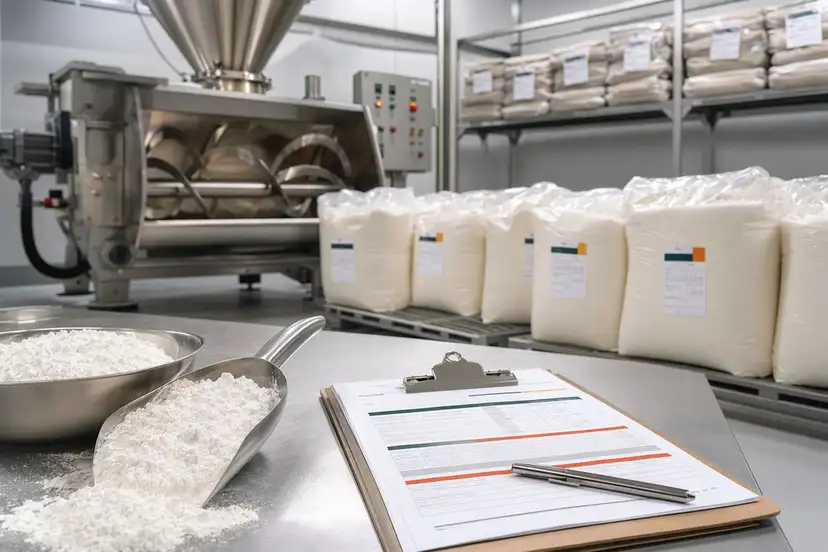
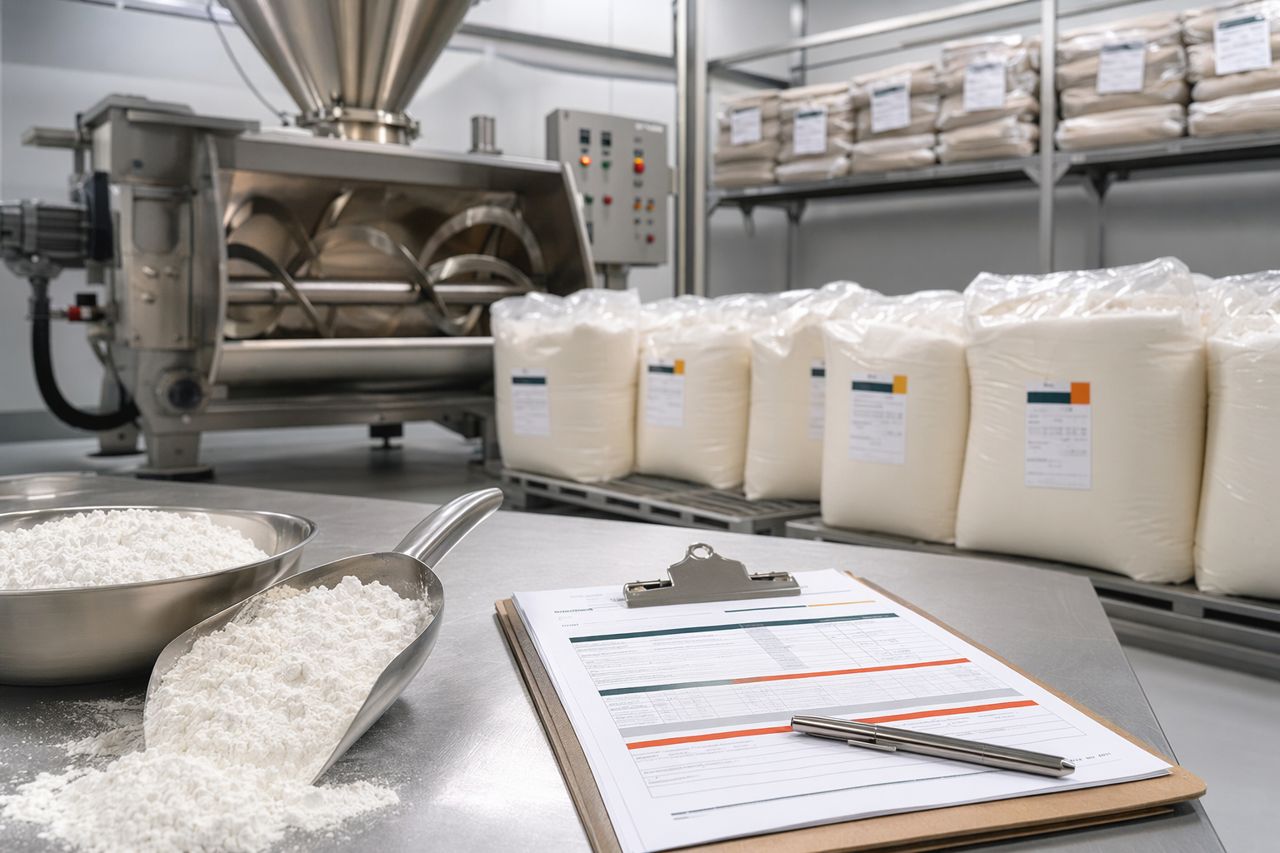
Private-label food brands do not choose a contract ingredient blender only for blending capacity. They choose the partner who can protect launch dates, keep formulations consistent, simplify supplier approval, and reduce sourcing risk across every ingredient in the blend.
That expectation becomes sharper when enzymes are part of the formula. Enzymes can affect dough handling, dairy processing, beverage clarity, plant protein texture, starch conversion, or finished-product consistency. For a contract blender, bulk food enzyme sourcing for ingredient blenders is not a side task. It is part of commercial reliability.
Private-label teams are asking one core question: can this blender manage ingredient complexity without making procurement or quality chase missing information?
The private-label buyer is measuring more than price
Price matters, but it rarely stands alone. A low enzyme quote can still create cost if it arrives with unclear documentation, variable lots, rigid minimums, or substitution problems during a launch window.
Private-label brands typically evaluate contract blenders across five practical areas:
- Approved supplier readiness
- Lot-to-lot consistency
- Complete food ingredient documentation
- Lead time discipline
- Clear substitution and change-control process
When a blender can answer these points before the buyer asks, the relationship feels controlled. That is what private-label teams want from a manufacturing partner.
1. Approved supplier readiness
Many private-label programs operate within defined supplier lists. Some are retailer-driven. Others are controlled by the brand, co-manufacturer, or technical team. Either way, the blender is expected to source from suppliers that can pass review quickly.
For enzymes, that means the procurement file should be organized before purchase orders begin moving.
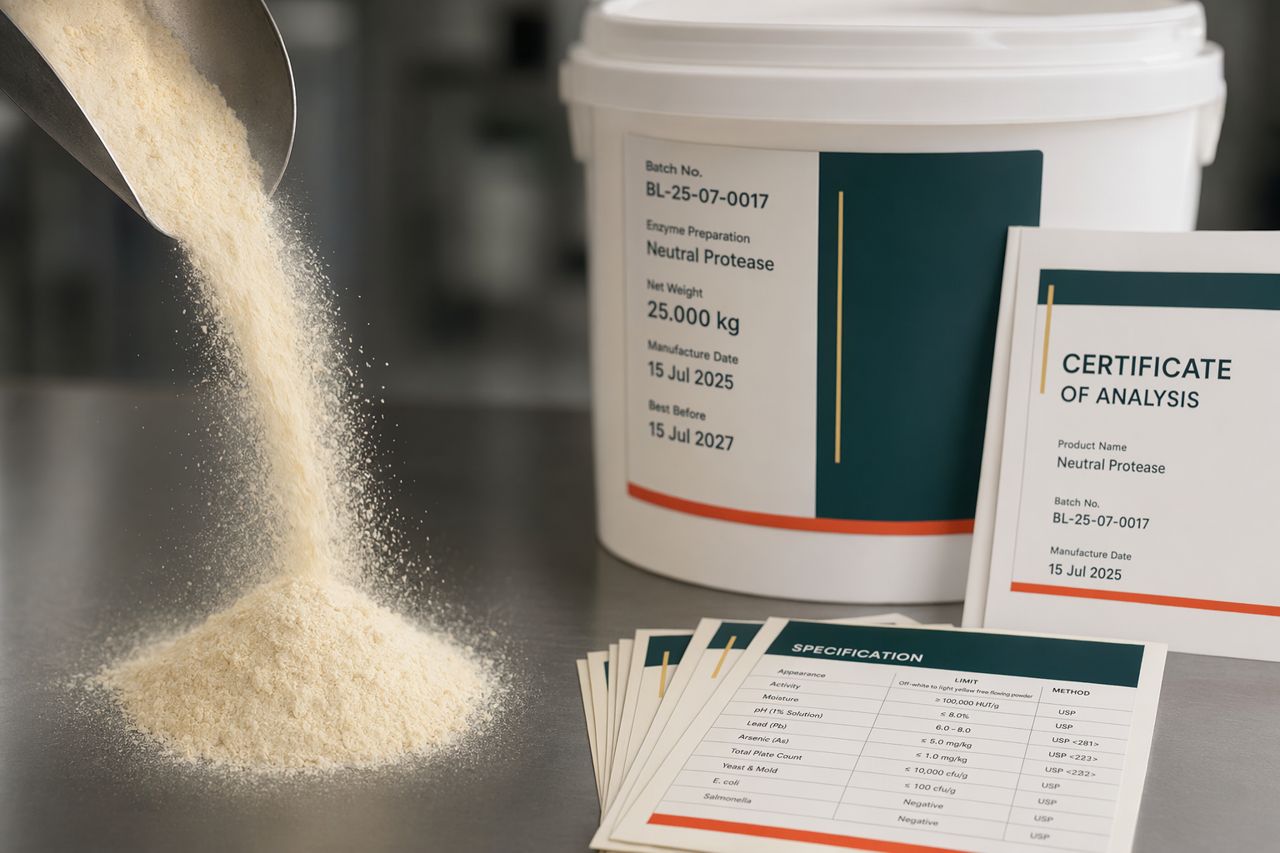
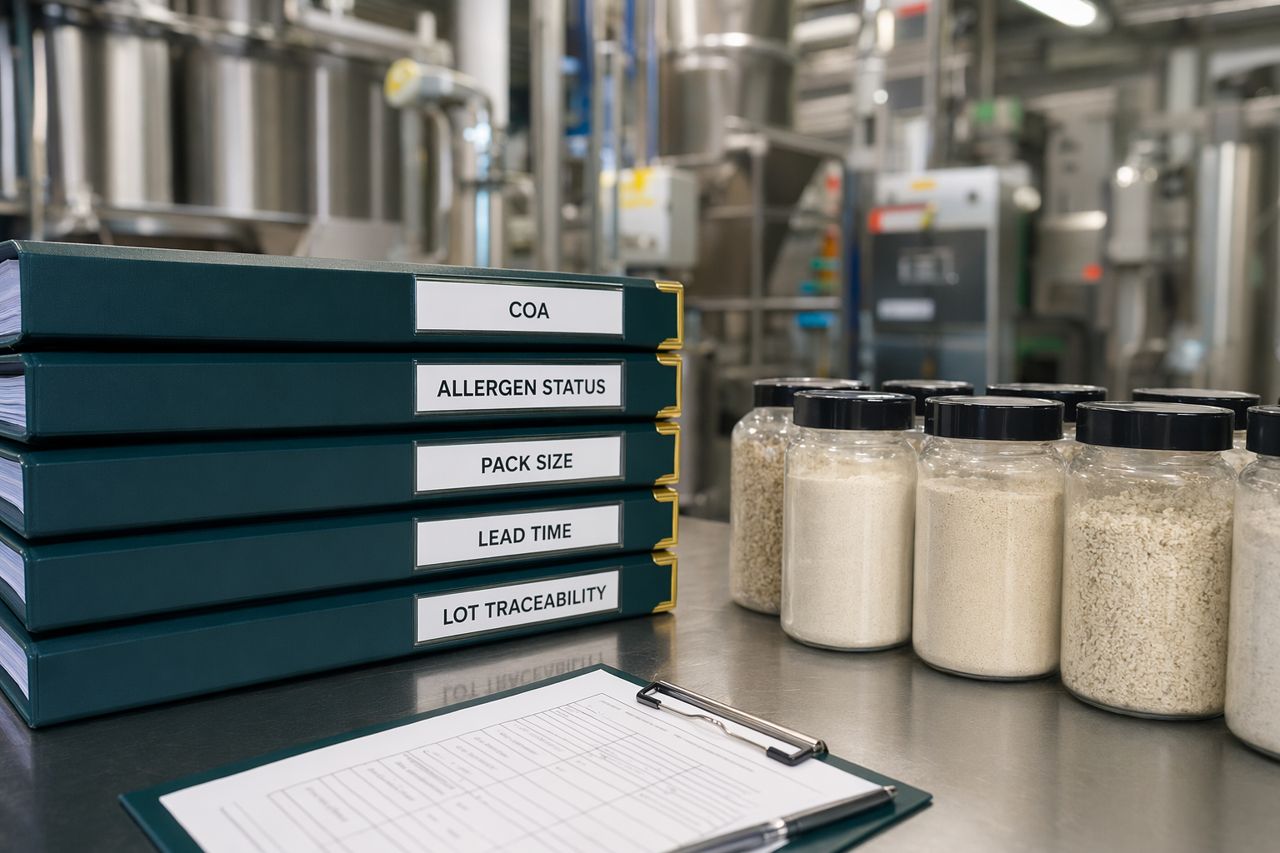
A strong supplier packet usually includes:
- Current specification sheet
- Certificate of analysis by lot
- Food-grade statement
- Allergen statement
- Non-GMO or identity-related statement when required
- Country-of-origin information when available
- Safety data sheet where applicable
- Kosher, halal, or other certifications when specified
- Traceability details tied to lot code and pack size
Private-label buyers do not want to rebuild this file from scratch each time the enzyme is reordered. They expect the blender to maintain supplier continuity and documentation discipline.
2. Lot consistency that supports repeatable blending
Contract blenders sell repeatability. If a brand orders the same dry mix, bakery premix, processing aid blend, or functional ingredient system three months later, it should behave predictably in production.
With enzyme-containing formulas, lot consistency matters because the enzyme is often a small inclusion with a meaningful process role. The blender needs confidence that the incoming material matches the declared specification band and that documentation supports release.
Private-label teams expect the blender to manage:
- Lot-code capture at receiving
- Clear internal traceability from enzyme lot to finished blend lot
- Retain sample practices appropriate to the program
- First-in, first-out inventory rotation where suitable
- Defined review when a replacement lot or supplier is introduced
This is not only a quality issue. It is a commercial issue. If a blend performs differently, the brand may face plant delays, customer complaints, or reformulation work.
3. Documentation that does not slow commercialization
Private-label launches move through tight gates: sample approval, pilot run, retailer review, first production, repeat order, and sometimes seasonal scale-up. Missing enzyme paperwork can stall any of those gates.
The best contract blenders treat documentation as part of the ingredient, not an afterthought.
For sourcing managers, the expectation is simple: when a buyer requests a quote, the blender should know which documents are available, which are conditional, and which require confirmation before order placement.
BatchLoom supports this by helping ingredient blenders source bulk food enzymes with procurement-ready documentation expectations built into the conversation. That includes pack size, lot traceability, food-use documentation, and supplier-fit questions before a purchase decision becomes urgent.
4. Lead times that match private-label planning cycles
Private-label brands often plan around retailer resets, promotional windows, plant reservations, and packaging print schedules. Ingredient delays can become launch delays quickly.
Enzymes may not be the largest-cost component in a blend, but they can become a critical-path item if sourcing starts late or if an equivalent material is not already qualified.
Blenders should clarify lead time expectations early:
- Standard stocked or made-to-order availability
- Bulk pack size options
- Minimum order considerations
- Import or domestic supply exposure
- Reorder timing for repeat programs
- Buffer stock strategy for active SKUs
A buyer does not need vague optimism. They need credible timing they can use in a launch calendar.
5. Substitution risk must be controlled, not improvised
Private-label brands are especially sensitive to unplanned ingredient substitutions. Even when a replacement enzyme serves the same general function, the documentation, allergen position, processing behavior, labeling impact, or customer approval path may differ.
A professional contract blender should never treat enzyme substitution as a casual swap.
Before changing a source, the blender should confirm:
- Whether the private-label brand requires pre-approval
- Whether documentation differs from the original source
- Whether the ingredient statement or technical file is affected
- Whether production trials are needed
- Whether the purchasing team has accepted the new lead time and cost basis
Good sourcing reduces substitution risk before it appears. That is why maintaining qualified supply options can be more valuable than chasing the lowest spot price.
What this means for enzyme procurement
For contract ingredient blenders, enzyme sourcing should be handled with the same discipline used for proteins, fibers, sweeteners, starches, cultures, flavors, and functional additives.
A well-managed enzyme sourcing process includes:
- Defining the enzyme type and application role
- Confirming food-use suitability and documentation needs
- Matching physical form to the blending process
- Aligning pack size with batch volume and inventory plan
- Reviewing supplier continuity and lot traceability
- Quoting against realistic lead times and repeat-order needs
- Establishing a change-control path before commercialization
This is where bulk sourcing becomes strategic. It is not simply buying a drum, bag, or carton. It is building a repeatable supply position around a formula the private-label customer expects to reorder.
Questions private-label buyers are likely to ask
A sourcing manager or technical buyer may not ask for every detail at once. But the expectation is usually there.
Be ready for questions such as:
- Is the enzyme supplier already approved or easy to qualify?
- Can we receive lot-specific COA documentation with every shipment?
- What pack sizes are available for pilot, launch, and repeat production?
- Are there known allergen or identity considerations?
- What is the normal lead time, and what changes at larger volume?
- Can the same source support repeat orders over the program life?
- What happens if the selected material becomes unavailable?
A blender that answers these questions clearly gives the private-label brand fewer reasons to hesitate.
The advantage for contract blenders
Private-label food brands reward predictability. If your team can blend accurately, document cleanly, source reliably, and quote with confidence, you become easier to approve and harder to replace.
Enzyme sourcing is one area where that advantage can show quickly. The inclusion rate may be small, but the procurement impact is not. A well-controlled enzyme supply position helps your team protect launch dates, reduce technical rework, and support repeat business.
Source bulk food enzymes with fewer procurement gaps
BatchLoom helps contract ingredient blenders evaluate bulk enzyme options around the details private-label customers actually care about: supplier fit, documentation, lot consistency, pack size, lead time, and repeat-order planning.
If you are quoting a private-label program or preparing a new blended ingredient system, share the enzyme type, target application, required documentation, expected volume, and preferred pack format.
Request a quote through the on-site form and BatchLoom will help align sourcing options with your procurement and production requirements.