Lot Traceability Basics for Multi-Ingredient Premix Manufacturers
For contract food ingredient blenders, traceability is not a paperwork exercise. It is how purchasing, QA, production, and customer service stay aligned when one premix contains ten, twenty, or fifty sourced inputs.
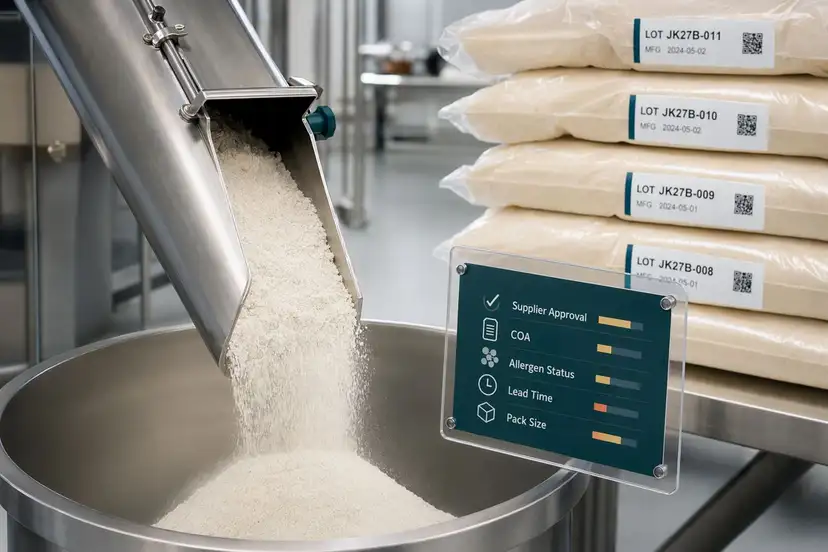
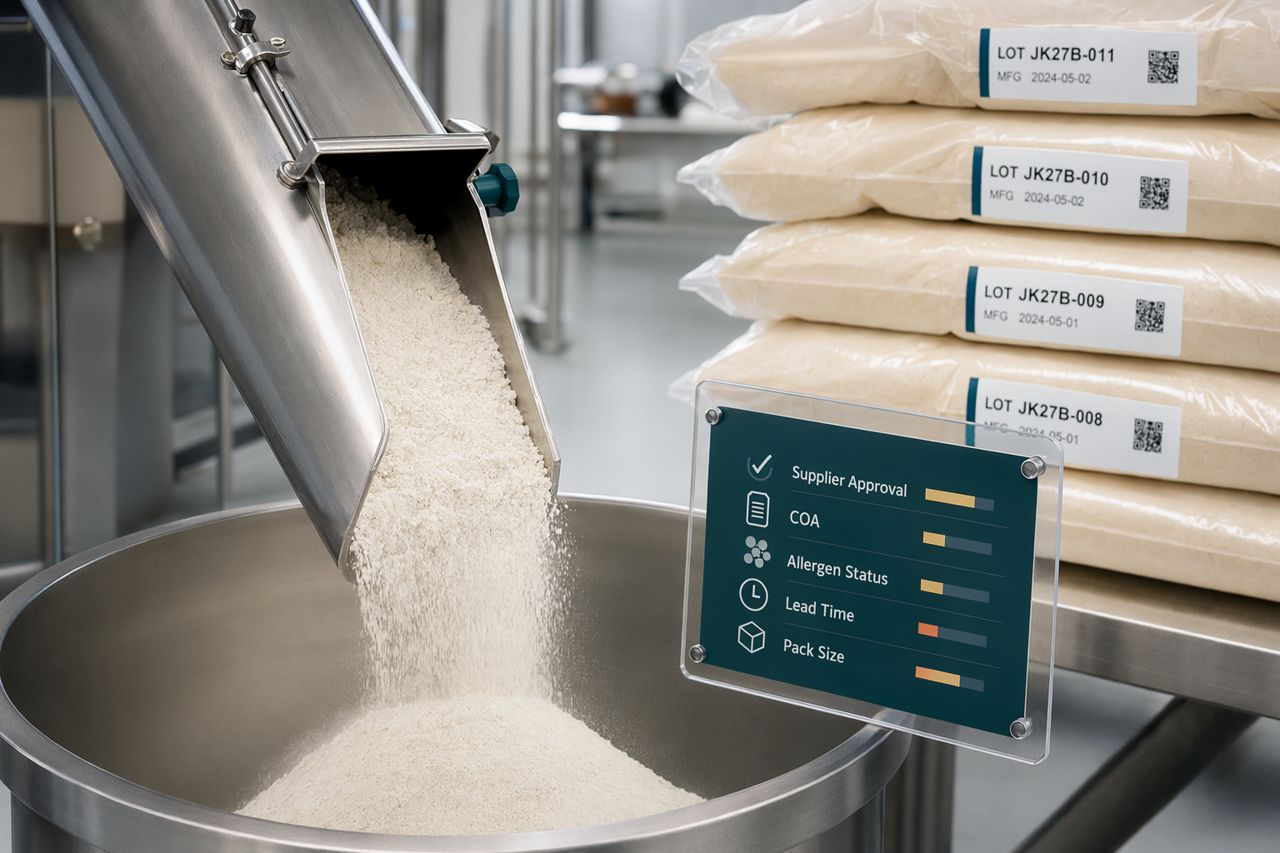
That becomes especially important when the formulation includes functional ingredients such as enzymes. Bulk food enzyme sourcing for ingredient blenders requires more than a price per pack. Buyers need supplier approval status, consistent lot documentation, declared specification bands, allergen position, lead time reliability, and a clear path when a substitution is proposed.
This guide outlines the traceability basics premix manufacturers should control before raw materials reach the blender.
Why lot traceability matters in premix operations
Premix manufacturing compresses multiple supplier histories into one finished lot. A finished powder blend may be shipped under one customer PO, but it carries the risk profile of every incoming material lot used in that batch.
Good traceability helps your team:
- Confirm which raw material lots were used in each finished premix lot
- Respond quickly to customer documentation requests
- Isolate affected inventory during a supplier notice or quality review
- Reduce over-holding when only specific lots are in question
- Support approved supplier requirements for food brand customers
- Compare supplier consistency over time, not just per shipment
For sourcing managers, traceability also protects the purchasing decision. A low-cost input becomes expensive if lot identity, documentation, or substitution history is unclear.
The minimum traceability chain
A reliable traceability chain should connect four records without gaps.
1. Supplier lot identity
Every incoming ingredient should arrive with a supplier lot number, product name, pack size, and manufacturing or best-before reference where applicable. For enzyme ingredients, make sure the lot identity on the label matches the lot identity on the certificate of analysis and supplier documentation.
If the product has been repacked, relabeled, or transferred through distribution, your supplier should still provide a clear chain back to the manufacturing lot or controlled bulk lot.
2. Receiving and internal lot assignment
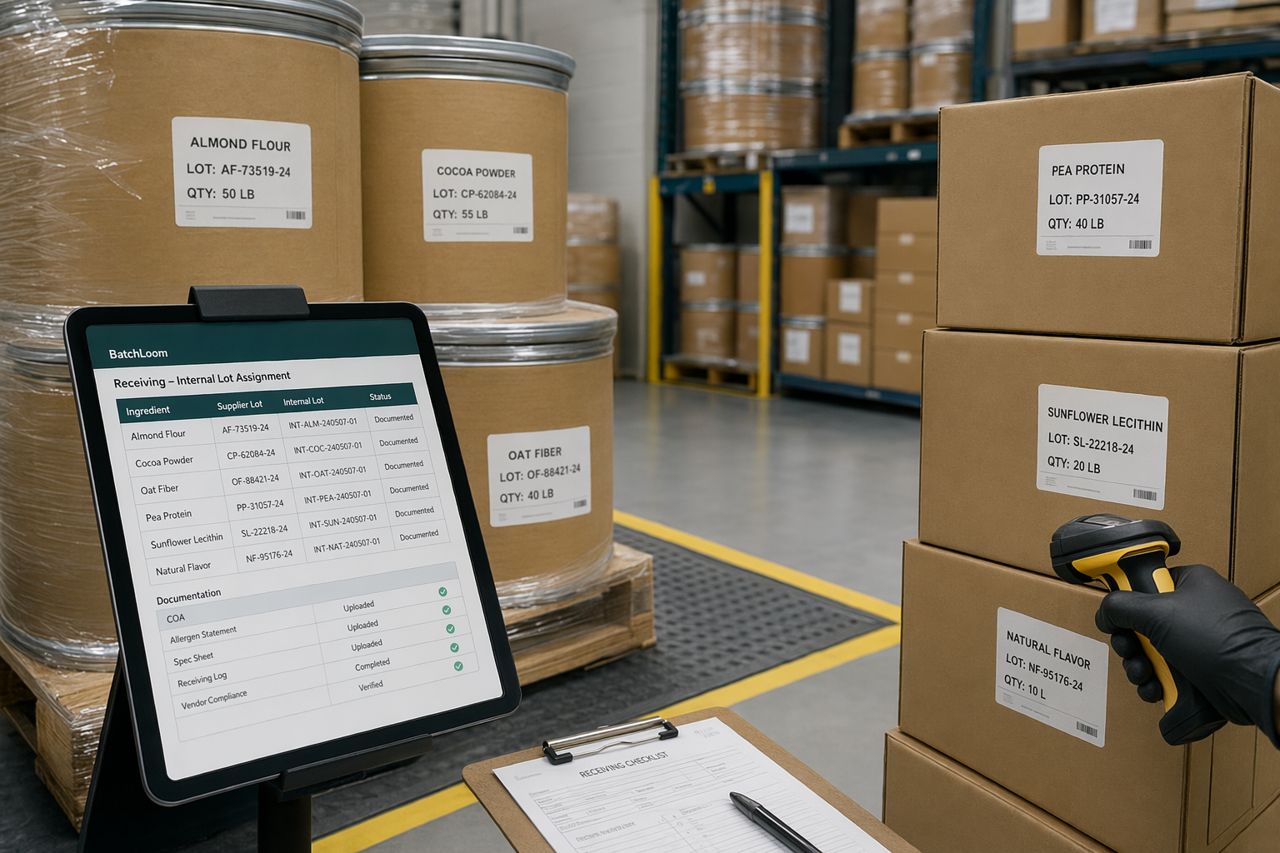
Your receiving team should assign or confirm an internal lot number before the material enters available inventory. The internal lot should connect to:
- Supplier name
- Supplier item code or approved material code
- Purchase order number
- Receipt date
- Quantity received
- Storage location
- Incoming inspection status
- Documentation status
For contract blending, the receiving record is often the first place a future customer inquiry is won or lost.
3. Batch usage record
When raw materials are issued to a blend, the batch record should capture the actual internal lots consumed. This is where premix traceability becomes operational. If a ribbon blender receives several powders in sequence, the batch record should show which lot went into which finished batch, not just that the correct item code was used.
Where partial bags or drums are used, your process should show the quantity consumed and the remaining quantity returned to inventory.
4. Finished premix lot release
The finished lot should connect back to the production date, batch sheet, raw material lots, in-process checks, packaging lots if relevant, and final release documentation. If your customer requests a lot genealogy, your team should be able to move from finished premix lot to raw material lots without manual reconstruction.
What changes when the blend includes enzymes
Enzymes are typically used for a functional role, not just bulk nutrition or flavor. That means sourcing control needs to account for continuity and substitution risk.
When adding enzyme ingredients to a premix program, review:
- Approved enzyme type and application fit
- Declared specification band on supplier documents
- Carrier and diluent profile
- Allergen and dietary declarations
- Country of origin and manufacturing site visibility where required
- Storage and handling requirements
- Shelf-life and retest expectations
- Pack size alignment with batch size
- Lead time and safety stock requirements
- Change notification expectations
A substitution that looks similar in a spreadsheet may not behave the same in a customer application. Before changing supplier, grade, carrier, or specification band, confirm how the change will be documented, approved, and communicated.
Documentation to request before first purchase
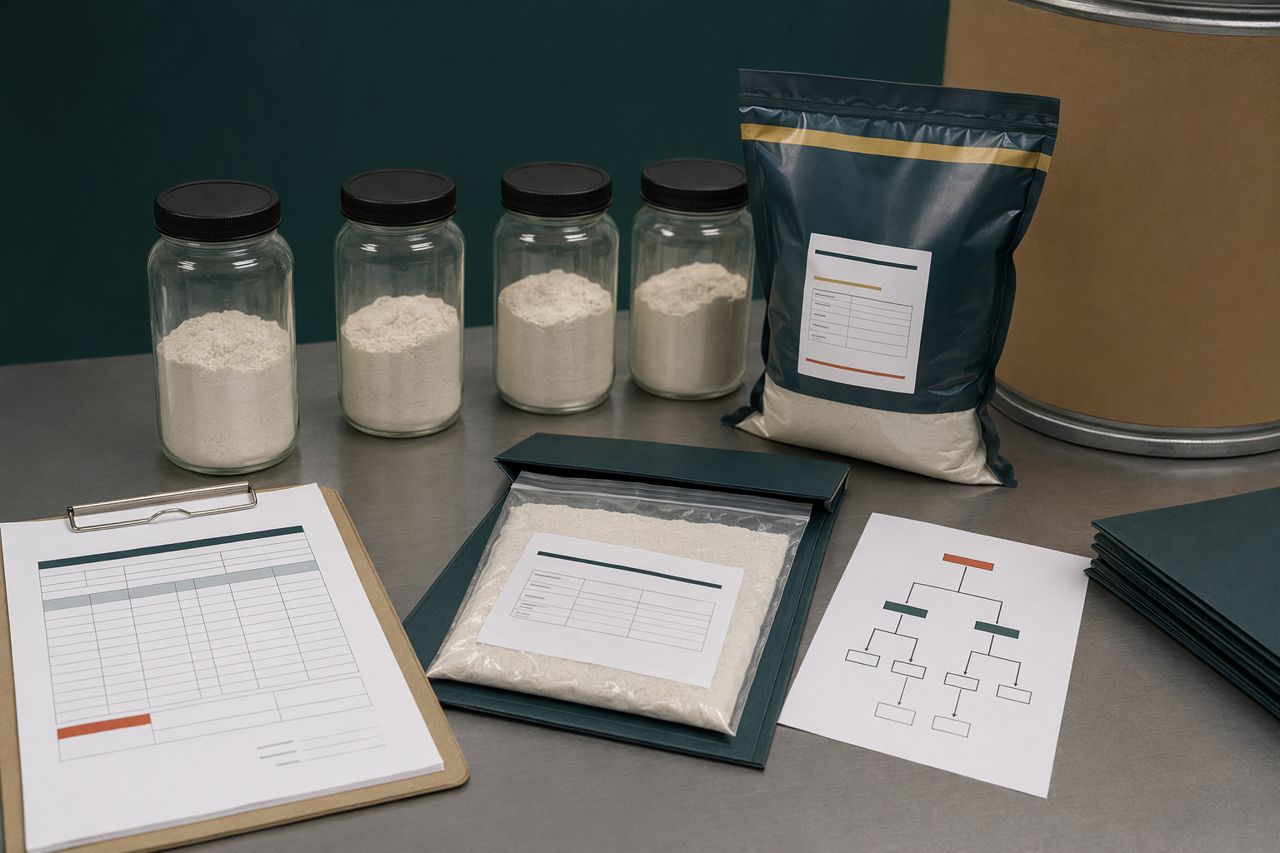
Before a new enzyme ingredient is approved for premix use, sourcing and QA should collect a standard documentation set. The exact requirements depend on your customer programs, but common documents include:
- Product specification sheet
- Certificate of analysis format
- Allergen statement
- Food-grade statement
- GMO position, if required by the customer
- Halal, kosher, or other certification where applicable
- Country of origin statement
- Safety data sheet
- Storage and handling guidance
- Shelf-life or retest statement
- Change notification policy
- Supplier qualification package
Do not wait until the first shipment is on the dock. Documentation gaps at receiving can hold production, force last-minute substitutions, and weaken your position with the end customer.
Practical receiving checks for bulk enzyme ingredients
Receiving should verify more than the product name. Build a simple checklist that confirms:
- Lot number on packaging matches the COA
- Pack count and pack size match the purchase order
- Material is from the approved supplier and approved item code
- Packaging is intact and suitable for storage
- Required documents are present and current
- Storage condition is identified before put-away
- Internal lot number is assigned before release
For ingredient blenders managing many small-to-medium production runs, these checks reduce the risk of mixing the right ingredient from the wrong lot.
Bulk sourcing considerations for premix manufacturers
Bulk food enzyme sourcing for ingredient blenders works best when the supplier understands premix operations, not just enzyme availability. Procurement teams should evaluate suppliers on the points that affect production control.
Lot-to-lot consistency
Ask how lot consistency is managed and how specification changes are communicated. Your customers may expect repeatable performance across premix lots, especially when the premix is used in bakery, dairy, beverage, protein, or processing applications.
Bulk pack practicality
A cheaper bulk format may create handling waste if it does not align with your batch size. Consider whether bags, cartons, fiber drums, or other pack formats support accurate staging, partial use, and clean storage.
Lead time and inventory planning
Enzyme lead times can vary by type, origin, and documentation requirements. Buyers should confirm standard lead time, bulk order cadence, and options for scheduled releases. A supplier that can support planned replenishment reduces substitution pressure.
Documentation responsiveness
When a food brand customer asks for allergen, origin, or lot documentation, speed matters. Evaluate how quickly the supplier can provide current documents and lot-specific records.
Substitution control
Make sure any alternative material is reviewed before it is shipped. Substitution control should include product identity, carrier system, declared specification band, documentation status, and customer approval requirements.
Common traceability gaps to avoid
Even strong premix facilities can develop weak points when purchasing and production move quickly. Watch for these issues:
- Supplier lot recorded at receiving but not linked to the finished batch
- COA filed separately without a clear lot connection
- Multiple open lots of the same ingredient used without quantity detail
- Partial containers returned to inventory without updated weight
- Emergency substitutions approved verbally but not documented
- Supplier item code changes not reflected in the ERP or batch sheet
- Customer-specific restrictions stored outside the purchasing workflow
The goal is not more paperwork. The goal is a traceability system that answers the right question quickly: which exact material lots went into this customer lot, and are the supporting documents complete?
A simple traceability review cadence
For multi-ingredient premix manufacturers, a quarterly traceability review can prevent year-end audit surprises. Select several finished lots and trace them backward to raw material lots, purchase orders, supplier documents, and inventory movements.
Use the review to check:
- Time required to retrieve complete documentation
- Whether raw material lots reconcile with batch usage
- Whether open inventory matches expected remaining quantities
- Whether any supplier documents are outdated
- Whether alternate suppliers are fully approved before use
- Whether customer-specific restrictions are visible to purchasing
This cadence is especially useful for enzyme ingredients because it shows whether sourcing flexibility is controlled or improvised.
How BatchLoom supports controlled enzyme sourcing
BatchLoom helps contract food ingredient blenders source bulk food enzymes with procurement discipline built in. We focus on the inputs that matter to buying teams and QA teams: approved supplier alignment, lot documentation, pack-size fit, lead time planning, and clear communication around specification and substitution.
If you are building a new premix program, qualifying an alternate enzyme source, or tightening lot traceability across existing blends, BatchLoom can help structure the sourcing conversation before the next production window.
Request a quote
Tell us the enzyme type, intended food application, target pack size, annual or spot volume, documentation requirements, and preferred delivery window. Use the on-site request a quote form, and BatchLoom will respond with a sourcing path built for ingredient blending operations.